Blocked drains · Clayton VIC 3168
Blocked Drains in Clayton
Gurgling toilet, slow shower or water bubbling up in the yard? We clear blocked drains and sewers across Clayton, then show you on camera what caused it so you know whether it will come back. Call 03 9088 4192.
Signs your drain is blocked
Drains rarely block without warning. Look out for:
- Water draining slowly from the shower, bath, basin or sink
- Gurgling sounds from plugholes or the toilet after you flush or run a tap
- A toilet bowl that rises higher than normal before emptying
- Bad smells from drains, especially outside near the gully
- Water bubbling up from the overflow relief gully in the yard
- Wet, soggy patches or unusually lush grass along the line of the sewer
- Water backing up into the shower or floor waste when the washing machine empties
If one fixture is slow, the blockage is probably close to it. If several fixtures are affected at once, or water appears at the gully outside, the main sewer line is likely blocked.
Why drains block in Clayton
Tree roots in old clay sewers
Most houses built in Clayton before the mid 1970s were connected to the sewer with vitrified clay pipe. The pipe itself is durable, but it comes in short lengths with a joint every metre or so, and those joints were sealed with mortar or a rubber ring that has hardened over time. As the ground shifts with wet winters and dry summers, small gaps open up.
Tree roots are drawn to the moisture and nutrients inside the pipe. Fine root hairs slip through the gaps and then thicken and spread inside, forming a dense mat that catches toilet paper and waste. Liquidambars, gums, willows, figs, citrus and other established trees common in Clayton backyards and nature strips are all capable of it. Even a tree in a neighbour's yard can send roots several metres to reach your pipe.
Root blockages tend to come back. Cutting the roots out clears the line, but unless the joint is sealed, the roots return, often within one to two years.
Share house kitchens
Clayton has many share houses near the Monash University campus, and kitchen sinks in those homes see heavy use. Cooking oil, fat, rice, noodles, coffee grounds and food scraps going down the sink build up inside the pipe until water stops flowing. In older homes, the kitchen waste may run a long way before it reaches the sewer, with plenty of places for build-up to collect.
Shared drains on townhouse sites
Where an original block has been subdivided into townhouses, several dwellings often share a single sewer line before it connects to the main in the street. A blockage in your own branch affects only you. A blockage in the shared section affects everyone downstream of it. Working out which is which matters when it comes to who pays.
Things that should never be flushed
Wet wipes, even those labelled flushable, do not break down like toilet paper. Along with sanitary products, cotton buds, paper towel and nappies, they are one of the most common causes of toilet and sewer blockages we see.
Broken or displaced pipes
Old clay pipes can crack under the weight of vehicles, from root pressure or because the ground has moved. Sections can drop or shift so a lip forms at a joint. Waste catches on the lip, builds up and blocks the line. In these cases the blockage will keep returning until the pipe is repaired.
How we clear blocked drains
Finding the blockage
We start by working out which fixtures are affected and where the sewer runs. We check the overflow relief gully and the inspection openings, which are capped access points on the sewer line, to see where the water is sitting.
Electric drain machine
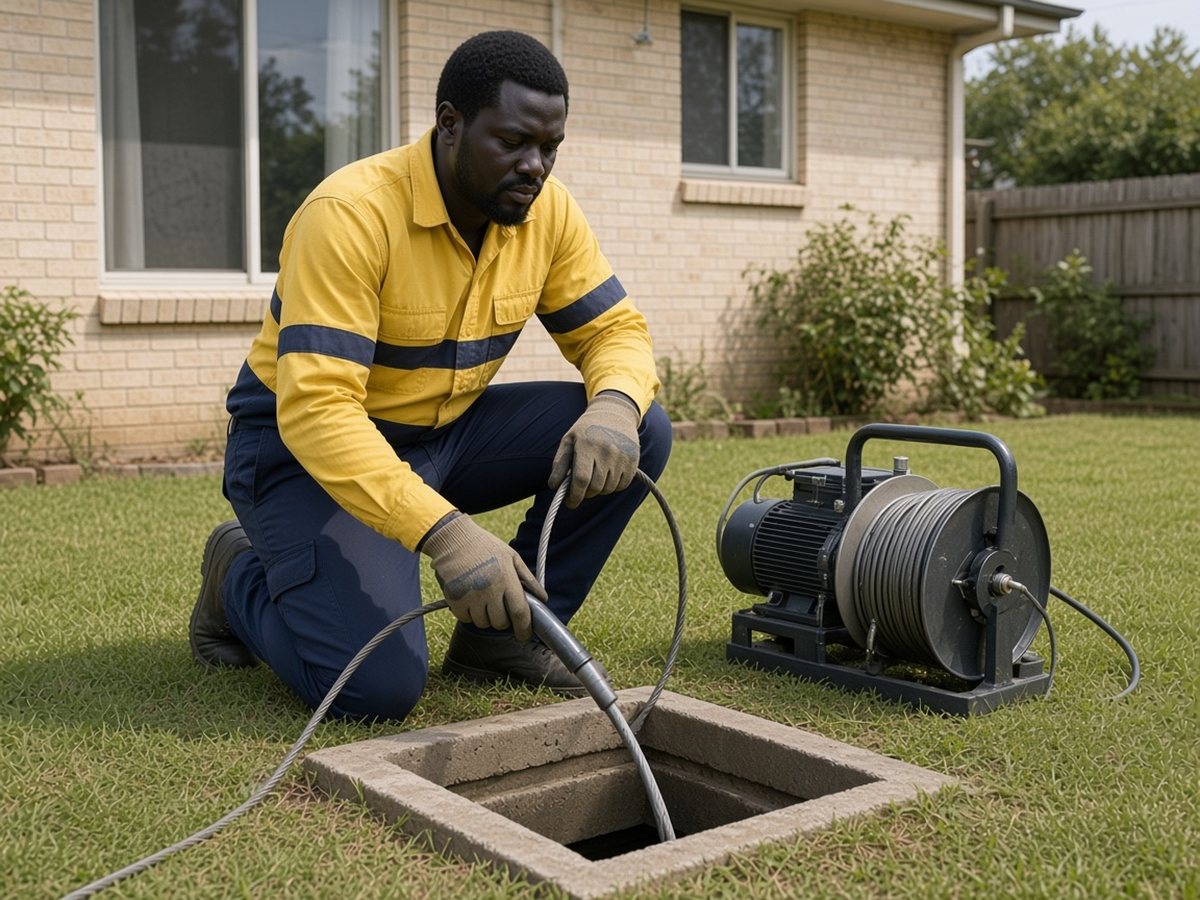
For root blockages and stubborn build-up in clay sewers, a motorised drain machine feeds a spinning steel cable through the line with a cutting head on the end. It cuts through roots and breaks up blockages so the line can flow again.
High-pressure water jetting
A jetter forces water through a specialised nozzle at very high pressure. Rear-facing jets pull the hose along the pipe while scouring the walls clean. Jetting is particularly effective for grease and fat build-up, silt and sludge, and for flushing out root fragments after cutting.
Hand tools for fixtures
For a blocked toilet, basin, sink or shower, we often start with hand augers and plungers at the fixture itself. If the blockage is further down the line, we move to the drain machine or jetter.
Camera inspection
Once the line is flowing, we push a waterproof camera through the pipe to see what caused the blockage. You can watch on the screen with us. The camera shows roots, cracks, displaced joints, sagging sections and build-up, and a locator tells us exactly where the camera is and how deep the pipe sits underground. We can save the footage for you, your landlord or your insurer.
When clearing is not enough
If the camera shows the pipe is in reasonable shape and the blockage was caused by something like grease or wipes, clearing the line is usually the full fix.
If roots are entering through open joints or the pipe is cracked, the problem will likely return. Your options then include:
- Regular maintenance clearing. Some owners choose to have the line cleared every year or two. This is the cheapest option in the short term, but the underlying damage remains.
- Pipe relining. A resin-impregnated liner is inserted into the damaged pipe and cured in place, forming a new pipe inside the old one. It seals joints and cracks against root entry without digging up the garden, driveway or paving.
- Excavation and replacement. Where a pipe has collapsed or sagged badly, digging up and replacing the section with PVC may be the only practical option.
We explain each option, show you the footage, and give you a clear price for what makes sense. We will not push you into relining a pipe that can be cleared and left alone.
Blocked stormwater drains
Stormwater is a separate system that takes rain from roofs, driveways and paved areas to the council drain in the street. Leaves, silt, sand and roots can block stormwater pipes and pits, and the first you know about it is usually water pooling against the house or flooding a courtyard in heavy rain.
We clear stormwater lines with the jetter, clean out silted pits and check the system on camera. If downpipes are disconnected or pipes are broken, we repair them so water flows away from the house.
Shared drains and who pays
On townhouse and unit sites, responsibility for a blocked drain depends on where the blockage is:
- A blockage in the pipe serving only your dwelling is usually your responsibility.
- A blockage in the shared section of the line is usually shared between the owners connected to it, or managed by the owners corporation if there is one.
- A blockage in South East Water's sewer main, beyond the property connection point, is the water authority's responsibility.
We locate the blockage and provide a written note stating where it was, with camera footage if needed. That makes the conversation with neighbours or the owners corporation much simpler.
Blocked drains in rentals
A blocked sewer that leaves a household without a working toilet is an urgent repair under Victorian tenancy law. Whether the tenant or rental provider pays depends on the cause. Tree roots and broken pipes are generally the rental provider's responsibility. Blockages caused by a tenant putting the wrong things down the drain may be the tenant's. Our report states the cause plainly so it can be resolved fairly.
Preventing blocked drains
- Scrape plates into the bin, and wipe oily pans with paper towel before washing them.
- Use a sink strainer in the kitchen and a hair catcher in the shower.
- Flush only toilet paper and human waste. No wipes, even if the packet says flushable.
- Keep the overflow relief gully grate clear of soil and mulch so it can do its job.
- Think about where you plant trees, and avoid planting large species near the sewer line.
- If you have had a root blockage before, consider a camera inspection to see whether relining makes sense.
Commercial drain cleaning
Restaurants, cafes and takeaway shops along Clayton Road put a lot of fat, oil and food waste into their drains. Even with a grease trap in place, the pipework between the kitchen fixtures and the trap needs regular attention. We offer scheduled jetting before opening or after close, and fast response when a floor waste backs up during service.
Why choose us for blocked drains
We carry a drain machine, a jetter and a camera on every job, so we can clear the blockage and show you what caused it in one visit. We explain what we find in plain language and give you honest advice about whether a further repair is worth it. We know the older sewer layouts in Clayton's streets and the shared drains on newer townhouse sites, which helps us find problems faster.
Why Clayton soils matter
Much of Clayton sits on clay soils that swell in wet winters and shrink in hot, dry summers. That seasonal movement is hard on old pipe joints. Each cycle can open a gap a little wider, which is why some homes see a root blockage return at about the same time each year. In parts of Clayton South and towards the sand belt, sandy soils behave differently, but they wash easily into stormwater pits and open sewer joints.
Inspection openings and access
To clear a sewer efficiently, we need access. Most homes have inspection openings, capped vertical pipes rising to ground level, somewhere along the sewer line, often near the boundary trap or at changes in direction. Over the years many have been buried under lawn, paving or garden beds. If we cannot find one, we may need to clear from inside, through a toilet or a gully, or install a new opening. Keeping your inspection openings visible and accessible makes future work quicker and cheaper.
The boundary trap
Many older Clayton homes have a boundary trap near the front of the property where the house sewer connects to the authority's system. It contains a water seal that stops sewer odours travelling back up into the house drain. Boundary traps are a common spot for blockages, especially where roots have grown in through the riser. We check the boundary trap as part of any main sewer blockage.
What not to do
- Do not keep flushing to try to push a blockage through. It usually makes the overflow worse.
- Do not pour boiling water or caustic chemicals into a blocked sewer, which can damage pipes and splash back.
- Do not hire a drain machine without experience. The cable can break, kink or get stuck in a damaged pipe.
- Do not cover or raise the ground around the overflow relief gully. It is there to protect your home.
After the blockage is cleared
Once the line is flowing, we flush it, check that every fixture drains properly and leave the area clean. If sewage has overflowed outside, we clean up what we reasonably can. If it has overflowed inside, we recommend contacting your insurer, as professional cleaning may be needed for carpets or flooring.
Drain blockages in apartments
In apartment buildings, each unit's fixtures drain into vertical stacks shared with the units above and below. A blockage in your own fixture or branch is usually your responsibility, while a blockage in the shared stack is common property. We clear the problem, note where it was and provide a report for the building manager.
Root barriers and planting
If you plan new trees near a sewer, a root barrier installed between the tree and the pipe can redirect roots downwards and away. It is not a substitute for sound pipe joints, but combined with relining it offers good long-term protection. Ask us to locate the line before you dig so you know where it is safe to plant.
Included
What comes with every blocked drains and sewers job
Questions
Blocked Drains and Sewers in Clayton: your questions
How do I know if the main sewer is blocked?
If several fixtures are draining slowly at once, or water is bubbling out of the overflow relief gully in your yard, the main sewer line is likely blocked. Stop using water and call us.
Will the roots grow back?
If roots are entering through open joints in a clay pipe, they usually grow back within one to two years after clearing. Relining the affected section seals the joints and stops them returning.
Can you show me what caused the blockage?
Yes. After clearing the line we run a camera through it and you can watch on screen. We can save the footage for you, your landlord or your insurer.
Is pipe relining better than digging?
Relining avoids digging up gardens, driveways and paving and is usually quicker. Where a pipe has collapsed or sagged badly, excavation may still be needed. We will tell you which applies after the camera inspection.
Are drain cleaning chemicals safe to use?
Caustic cleaners can damage older pipes and are dangerous to handle, and they rarely shift root blockages. If a drain is slow, it is better to have it cleared mechanically and find the cause.
Who pays for a blocked shared drain on a townhouse site?
Usually the owners connected to the shared section share the cost, or the owners corporation handles it. We provide a written note stating where the blockage was to help sort this out.
Do you clear stormwater drains as well?
Yes. We clear stormwater pipes and pits with the jetter and check them on camera, and we repair broken pipes and disconnected downpipes.
How long does it take to clear a blocked sewer?
Most residential sewer blockages are cleared within an hour or two, including a camera check afterwards. Severe root masses or difficult access can take longer, and we will tell you if that is likely.
Worth reading
Before you call, read this
Book or get a quote
Tell us about the job
Fill in the basics and a licensed Clayton plumber will ring you back. If water is escaping right now, skip the form and phone 03 9088 4192.
Prices are never listed online. We inspect first, then settle the cost with you before a single tool comes out.
How a job runs
From the first call to the final check
- 1Call or send the form
Tell us what is going on and what kind of place it is. Snap a picture of the leak, the drain or the sticker on your cylinder and send it through, so the right spares come with us.
- 2We find the cause
On site we track down the fault, show you what we found and agree the price with you. No work starts until you are happy.
- 3We fix and test it
Repairs are done to the Plumbing Code of Australia and the relevant standards, then run and checked with you there.
- 4Clean up and paperwork
Old parts go in the van, the area is left tidy, and you get a written summary plus a compliance certificate where one is required.
Other services
More plumbing help in Clayton
Where we work
Clayton first, then the suburbs either side of it
Most days begin within a few streets of Clayton Road. From there it is a short run up to Notting Hill and Mount Waverley past the university, west along Centre Road to Oakleigh, Huntingdale and Oakleigh South, south over Heatherton Road into Clayton South, and east along Wellington Road and the Princes Highway to Mulgrave and Springvale. Somewhere else nearby? Ring 03 9088 4192 and we will tell you honestly if we can get there.